

Accommodation on Morocco Adventures

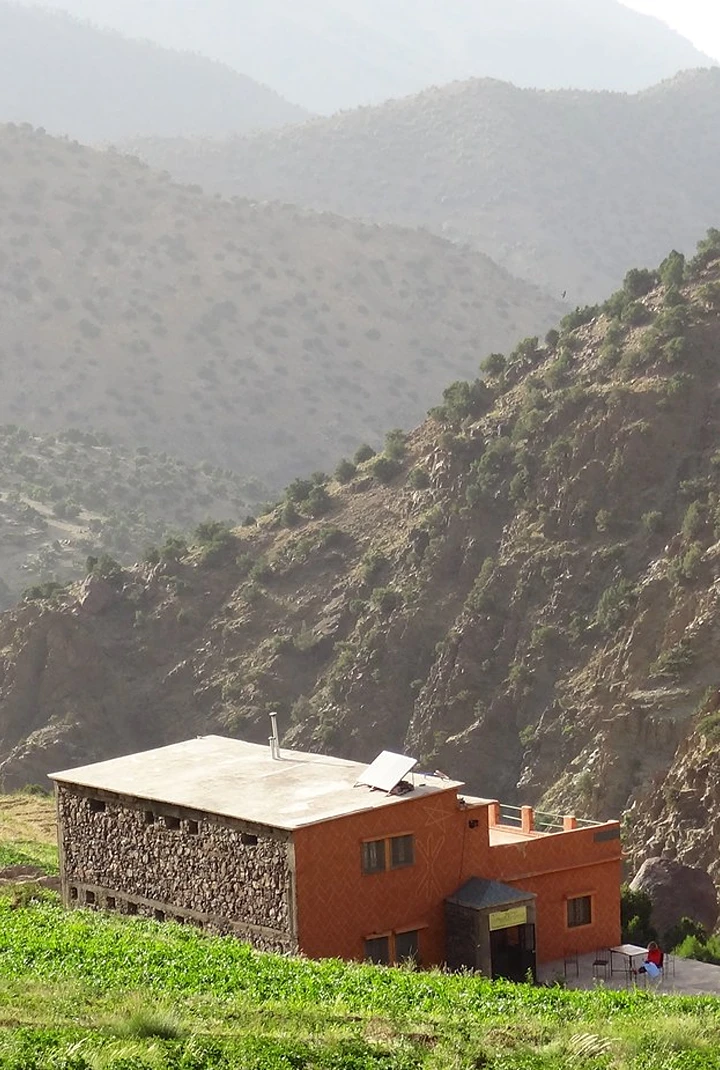
Mountain accommodation in a Moroccan valley
Different routes, different overnight settings

Read the itinerary before assuming a standard

Accommodation on a Morocco mountain tour is closely tied to geography. A night in Marrakech is different from a village guesthouse, a high mountain refuge or a camp reached on foot. The published catalogue uses several of these settings, but no single description applies to all 15 trips.

The individual itinerary and included section are the authority for each programme. This guide explains common terms so travellers know what questions to ask. It does not promise a named property, room category, private bathroom, heating, electricity or luxury standard unless that detail appears in the selected trip and is confirmed.

Season, access and local availability can affect arrangements. If a particular room setup or facility is essential, raise it before a booking is confirmed rather than relying on a general image of “Atlas Mountains accommodation.”

Accommodation types in the catalogue

Marrakech hotels and riads

Several multi-day programmes begin or end around Marrakech, and some explicitly include city accommodation. “Hotel” and “riad” describe different property styles but not a guaranteed rating. Location, room type, meals and exact property should be confirmed for the chosen departure.

A city stay can provide a transition before or after mountain travel, but it should not be assumed on compact programmes unless listed. Review whether arrival and final nights are part of the trip or require separate arrangements.

Village guesthouses and gîtes

Village accommodation can place travellers closer to the route and local community. Facilities may be simpler than urban accommodation, rooms may be shared or arranged differently, and hot water, heating or connectivity can vary. That simplicity should be understood in advance rather than disguised with hotel language.

Guesthouses appear in mountain and cycling contexts where the route passes through inhabited valleys. Respect the property as part of a community: conserve water, manage noise and follow local guidance.

Mountain refuges

Refuges serve practical mountain access. The authoritative Mount Toubkal and High Atlas ski itineraries include refuge nights where stated. Expect a functional shared mountain environment rather than private hotel service. Sleeping arrangements, meals and facilities should be checked against the actual programme.

Refuges can be busy and are affected by access, season and conditions. Bring the personal overnight items requested in the final equipment list and keep luggage manageable.

Camps and bivouac-style nights

Some M’Goun, Siroua, Saghro and desert routes explicitly use camps. A camp can provide access to remote stages where built accommodation is unavailable, but comfort, washing facilities, sleeping equipment and luggage support must be understood from the itinerary.

Do not assume that every trekking trip includes camping or that all camp equipment is supplied. Check inclusions and ask about personal sleeping items, seasonal temperatures and how waste and water are managed.

How accommodation changes by route

Mount Toubkal and winter programmes

The two-day Mount Toubkal trek uses the refuge context described in its itinerary. The five-day winter route adds valley stages before the summit approach. Ski programmes can combine village, Imlil and refuge accommodation. Snow and access may affect the operational plan, so exact arrangements require confirmation.

M’Goun, Siroua and Saghro trekking

Longer remote routes use a mixture of village accommodation and camp-based stages where explicitly stated. The M’Goun Summit and Gorges trek travels through terrain where camps are part of the source itinerary. Siroua and Saghro have their own day-by-day overnight descriptions; do not transfer assumptions from one programme to another.

Cycling and southern journeys

Multi-day cycling covers a wider geographic corridor and may use city, valley and regional properties. The word “tour” does not guarantee one accommodation category throughout. The eight-day e-bike and ten-day gravel itineraries list the route sequence and inclusions available from the source documents.

For the Draa Valley and Sahara trek, the walking character of the journey is important. It is not a generic vehicle desert package, and overnight arrangements should be read together with camp support and daily walking stages.

Comfort, facilities and connectivity

Remote accommodation may have limited power, charging, mobile signal, Wi-Fi, hot water or heating. Availability can change, so prepare to be less connected and more self-sufficient than in Marrakech. A power bank, head torch, compact toiletries and ear plugs may be useful, subject to the equipment guidance.

“Simple” should not be interpreted as poor, and “luxury” in a source title should not be expanded into unsupported five-star promises. The five-day ski programme retains its source-defined title while the page limits claims to its verified itinerary and services.

Respectful use of accommodation

Use water and energy thoughtfully, keep shared spaces orderly and follow host guidance. Mountain accommodation works within local constraints and may serve residents, staff and other groups at the same time.

Tell the team about an essential accommodation requirement before confirmation. Accessibility, allergies, dietary requirements, room arrangements and medical needs cannot be assumed from a generic page. Use the contact form to ask, and review our responsible travel guidance.

Check accommodation trip by trip

Open the itinerary and inclusions for the journey you are considering, then ask about any facility that matters to you.

View TripsAsk a Question

If your plans include nights before or after the published itinerary, ask whether those stays are your responsibility. Do not assume that a transfer day automatically includes accommodation, early check-in or luggage storage.

WhatsApp