

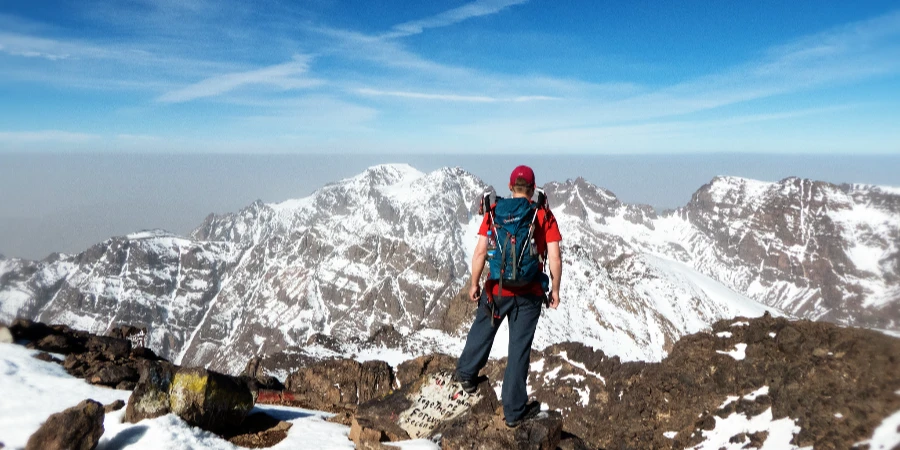
Travelling with a local mountain team
Guides and support teams help turn a mountain itinerary into a well-organised journey. They contribute route understanding, day-to-day coordination, communication and local perspective while guests experience Morocco's trails, landscapes and communities.
The people involved vary according to the activity, route, season and group. A trekking journey may use different support from a ski-touring programme or a shorter hike. The selected trip page and your confirmed arrangements are the source for what is included on a particular departure.
The role of a mountain guide
A guide leads the planned route and helps the group understand both the journey and the environment around it. The role combines practical mountain leadership with clear communication and attentive group management.
Following the itinerary and explaining the day's terrain and programme
Monitoring conditions, pace and the wellbeing of the group
Making considered decisions when weather, trail or group circumstances change
Helping guests travel respectfully through mountain landscapes and communities
Coordinating with the other people supporting the itinerary
Porters, muleteers and journey support
On some trekking itineraries, porters, muleteers or other local team members may help move group equipment and luggage between overnight stops. Support can also involve food, camp or accommodation logistics where the programme requires it.
This work is different from guiding. A guide leads the route and works with the group throughout the mountain day; porter and logistics support focuses on moving agreed loads and helping the wider itinerary operate.
Terrain, seasonal access and the design of the trip determine what form of support is appropriate. It should never be assumed that a mule, porter, cook or support vehicle is part of every trip.
Local knowledge and mountain decisions
Knowing a route means more than following a line on a map. Local teams understand how trails connect with villages, valleys and seasonal access, and they can place the landscape in its cultural context. That insight also supports practical decisions about timing, rest points and the day's progress.
Mountain conditions can change, and no itinerary removes every risk. Guests should follow guide instructions, communicate honestly about how they feel and arrive prepared for the stated difficulty. A guide may adapt the day's plan when conditions or group wellbeing make that the responsible choice.
A strong mountain journey is a shared effort: informed leadership, responsible support and guests who participate with preparation and respect.
Cultural connection
Local guides and partners can help travellers understand the places they pass through, communicate considerately and respect community life. This human connection is an important part of travelling through Morocco, not an optional extra added to the scenery.
Responsible support
Isouktan Expeditions approaches guides, porters, muleteers, drivers and local partners as essential members of the journey. Routes and logistics should be planned with respect for the people doing the work, the animals used where appropriate and the communities hosting travellers.
What guests carry
Even where luggage support is included, guests should normally expect to carry their own day pack. It should hold the personal items needed during the day, such as water, weather protection, warm layers, sun protection, medication and other essentials identified for the trip.
Pack only what the itinerary requires and keep personal luggage manageable. For general preparation guidance, read our Clothing & Equipment page. Your trip information will explain any route-specific luggage arrangements.
Support depends on the trip
Trekking and hiking: the route may involve a guide and, on some programmes, luggage or camp support.
Ski touring and winter journeys: leadership and equipment needs depend on the programme and current mountain conditions.
Other mountain adventures: staffing and logistics are matched to the itinerary rather than applied as a single package to every trip.
Check the inclusions and practical information on the individual trip page. If the support arrangement is unclear, contact the Isouktan Expeditions team before making your booking request.
Questions to ask about guide and porter support
The phrase “guided trek” does not answer every practical question. Before travelling, read the day-by-day route and the included section, then clarify anything that affects preparation. A useful conversation can cover who leads the activity, how luggage moves, which nights use a refuge or camp, and what you must carry.
Is guide support stated for every active day, and does the programme include transfers before or after the route?
Is luggage support listed, and if so, does it use people, mules or another arrangement appropriate to the itinerary?
Which personal items must remain in your own day pack throughout the day?
Can weather, snow, access or group ability change the intended route or objective?
These questions are especially important for a winter Mount Toubkal journey or a High Atlas ski touring programme, where mountain conditions may change the plan. They also matter on camp-based trekking routes in the M’Goun Massif or southern Morocco.
Guidance supports decisions; it does not guarantee outcomes
A guide contributes route understanding, observation, pacing and communication. That cannot remove altitude, weather, snow, heat, fatigue or other mountain risks. Summit access and daily objectives remain subject to the conditions described on the trip page.
Guests should prepare honestly, follow instructions, disclose concerns and understand that adapting or turning back can be the responsible decision. This distinction is central to useful information about Morocco trekking guides: professional support should never be marketed as guaranteed success.
